
Research project · Road safety
y u no stop
Understanding stops, zones, and speed. Privacy matters. So does road safety.
A research project collaboration with blvze from the phfuck.it crew .
Three questions.
One moving object.
The research asks whether an object stopped in a given zone, whether it stopped at all during the observed pass, and how fast it was moving during that time. A stop outside the chosen zone is a different event from a stop inside it.
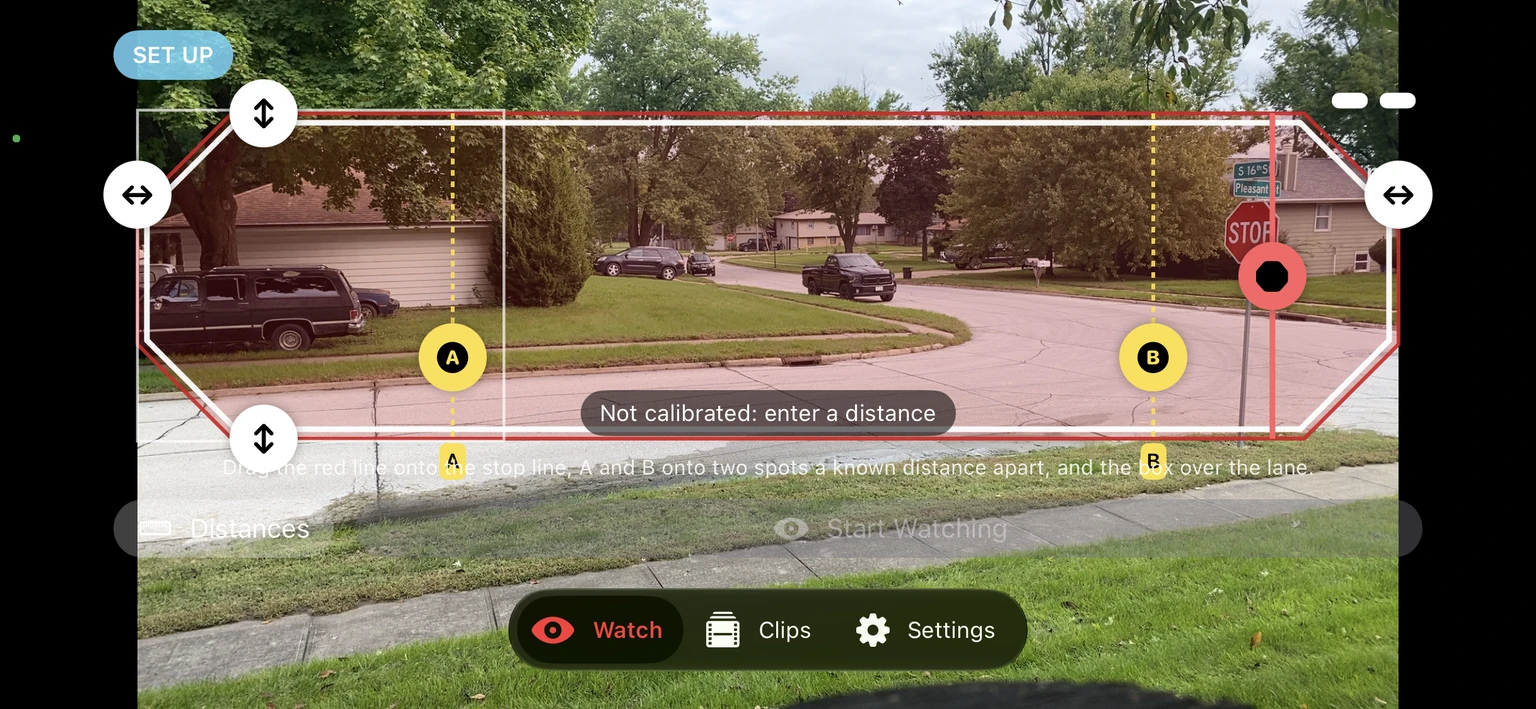
The current iPhone prototype focuses on vehicles passing through a lane viewed by a stationary camera. You mark the lane and stop line, define the stop zone, and calibrate the image with a measured distance. The app follows motion over time to estimate speed and assess a stop within that zone.
- In the zoneStudy where a stop happens relative to the selected area and line.
- Stopped at allDistinguish a pause elsewhere in the observed pass from a stop in the intended zone.
- Speed over timeEstimate speed through the pass, including at the line, the minimum in the zone, and the maximum observed.
On the phone.
Privacy first.
No personal data is saved to or shared with third-party vendors by the app.
Processing, measurements, and saved clips stay on the phone in the app’s local storage. The current prototype has no upload service or third-party analytics integration.
It does not currently use any AI for profiling or enrichment. Motion is measured by comparing camera frames against the background and tracking changes over time. It does not build identity profiles or enrich observations with outside data.
Road footage can still contain people or identifying details. Sharing a clip or saving it to Photos is an explicit action you choose; exported copies follow the destination’s settings. iOS device backups are also governed by your own backup settings.
Inside the prototype.
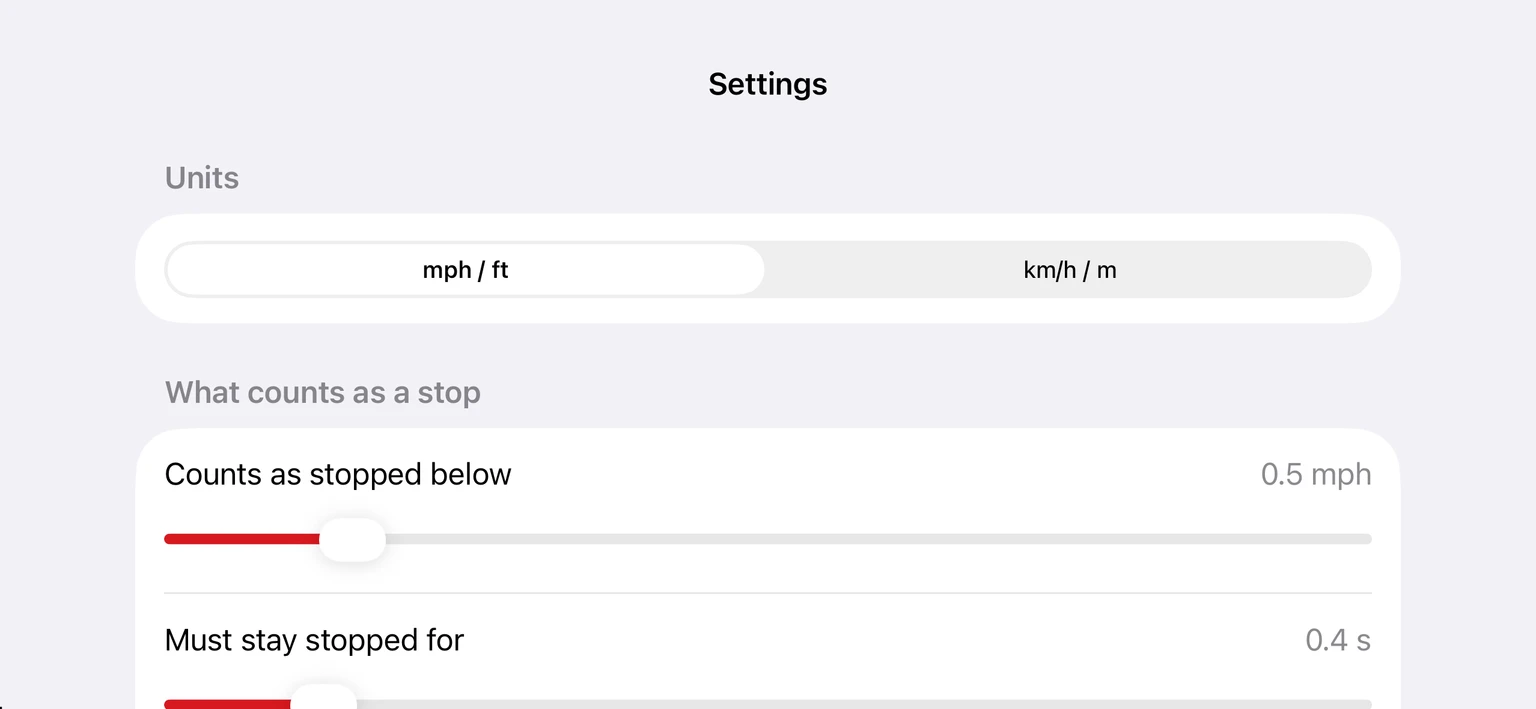
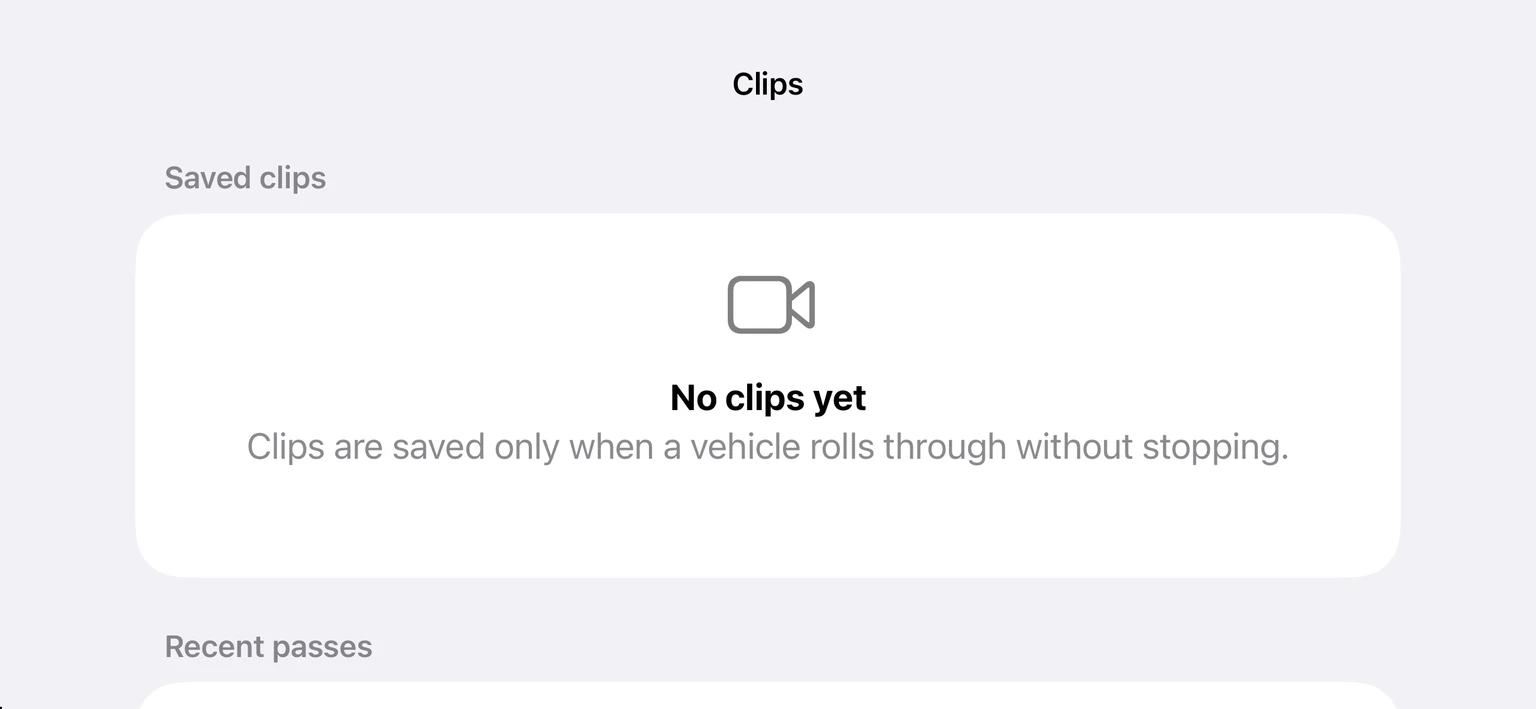
The stop threshold, required duration, and zone boundaries are adjustable. These fresh simulator captures show the actual app’s controls and an empty local clip library, without staged traffic results. Open either image for a closer look.
Road safety is the point.
The goal is to understand stopping behavior while keeping the observation on the device. Use a fixed phone in a safe position off the roadway and calibrate from a safe location.
This is a research prototype. Camera angle, calibration, lighting, shadows, and overlapping traffic affect the estimates. The current stop verdict applies to the configured zone; the broader research questions are not a claim of certified speed accuracy.
Good to know.
What counts as a stop?
The app checks whether the tracked front edge stays below the configured speed threshold for the configured duration inside the stop zone. You can change the threshold, duration, and zone boundaries in Settings.
How does the app estimate speed?
A measured distance converts movement in the image to a real-world scale. The app tracks motion across camera frames and estimates speed from position changes over time. It currently uses no neural network for this motion analysis.
Which recordings are kept?
The prototype starts a recording when a pass begins. It keeps a clip when it judges that pass as a no-stop, and discards the recording for a stop. Saving unclear passes is optional. A local recent-pass log can remain even when its video is discarded.
Does anything get sent to a vendor?
The app does not upload recordings, measurements, or personal data to third-party vendors. Its analysis and storage are local. If you choose Share or Save to Photos, the resulting copy is subject to that destination’s settings; your iOS backup settings also apply.
Is this an AI profiling tool?
No. The current project does not use AI for profiling or enrichment, identify people, or match observations to outside identity records. Its purpose is research into motion, stopping behavior, and road safety.
Research questions?
Tell us you’re asking about y u no stop. For a technical issue, include your device, iOS version, and the setup or behavior you observed.